
Last Updated on January 11, 2026 by Ecologica Life
Plastic pollution is no longer just an environmental issue — it’s a biological one.
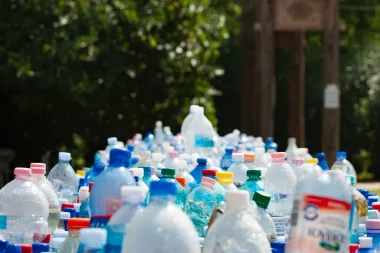
Microplastics have now been found in human blood, lungs, brains, and even in semen. Meanwhile, the world is producing more plastic than ever, and only a tiny fraction of it — around 9–15% — is recycled.
But something extraordinary in happening.
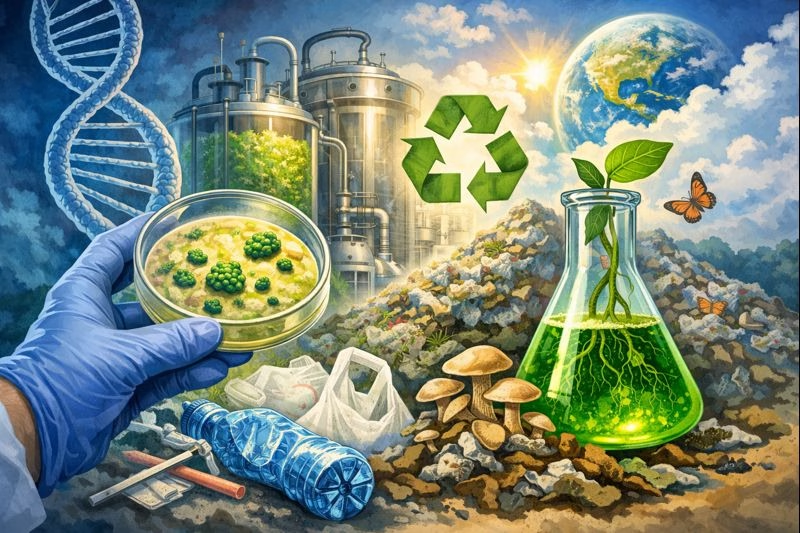
For the first time, synthetic biology, enzyme engineering, and environmental biotechnology are giving us realistic tools to break down, repurpose, and even upcycle plastic into valuable products.
This deep dive explores five breaththroughs reshaping how we think about plastic — not as indestructible waste, but as a resource.
Is Plastic Really a Problem?
Plastic production has doubled in the past two decades, rising from 234 million tonnes in 2000 to nearly 435 million tonnes in 2020 — and projections indicate even more rapid growth.
Macroplastics are the problem we see. Microplastics are the problem we don’t see.
These tiny fragments (often <1 mm) have been found in:
- Drinking water and bottled water,
- fish and seafood,
- dust,
- salt, sugar, tea bags, and even milk,
- lung tissue and blood,
- human semen,
- brain tissue.
While the long-term health effects remain uncertain, emerging evidence links microplastics to oxidative stress, DNA damage, inflammation, microbiome disruption, and endocrine effects.

How Microplastics Can Disrupt Hormones
I suspect that most microplastics either pass through us or are detoxified and excreted by the body. I have no direct evidence for this, only that if every microplastic we consumed was deadly to us, we would have noticed this issue a LOT sooner than we did. It may or may not, be fair to compare microplastic consumption to smoking a cigarette. One cigarette gives you a minute chance of developing cancer later on in life, but smoking many will increase your chances of health future health problems significantly.
Beyond their carcinogenic potential, microplastics are increasingly linked to persistent inflammation, microbial imbalances (dysbiosis), and hormonal imbalances in humans.
But, focusing too much on the problem can be a major downer. So lets explore what is being done to tackle this problem on the biotech front.
Breakthrough 1: Microbial & Enzymatic Attack on Plastics
Nature is adapting. And scientists are helping it adapt faster.
A) Bacteria
Ideonella sakaiensis is something of a new celebrity in the scientific world. This polyethylene terephthalate (PET)-eating bacterium was discovered in 2016. It uses two enzymes — PETase and MHETase — to break PET into its monomers and consume them as fuel.
fun fact: enzymes usually describe what they break down. Ase means enzyme and PET means… polyethylene terephthalate, hence PETase. So what is MHETase? MHETase breaks apart hydroxyethyl terephtalic acid, the PET degradation product by PETase. These two enzymes are what allow Ideonella Sakaiensis to consume PET plastic.
Many other marine bacteria like Rhodococcus ruber have shown promise in tackling PE and PET in aquatic environments. In fact, it seems there are a great many species of marine bacteria that break down plastics. It appears that since the 20th century when we starting producing plastics, bacteria have increasingly evolved to digest them.
Marine Fungi
In contrast, Parengyodontium album is one of only four species of marine fungi known to be able to break down plastics. Its been found in the Great Pacific Garbage Patch, as well as some museums and monuments, where it has been known to break down items of historical importance. This includes Leonardo da Vinci’s Atlantic Codex dating back to the late Middle Ages.
It can live on on plastic, wall paintings, dead bugs and can even infect people under the right conditions. Researchers have noted that P.album only breaks down polyethylene that has been exposed to UV light, indicating that it probably only breaks down plastic floating near the ocean surface.
While the fungus converts most of the carbon from polyethylene into CO2, the environmental impact of this CO2 release is minimal, akin to the amount exhaled by humans during breathing.
Engineered Enzymes
Enzyme engineering is where progress is booming.
Researchers have evolved PETase and cutinase-like enzymes (e.g., LCC-cutinase) that break down PET in hours to days instead of decades.
A key question emerges:
Does faster degradation just create microplastics more quickly?
This is why controlled environments and capture systems will be essential in industrial enzymatic recycling.
What Is Cutinase and Why Can It Break Down Plastic?
Cutinase naturally degrades cutin, a waxy polyester forming the protective surface of plants.
PET — a synthetic polyester — coincidentally resembles cutin at the chemical level.
Thus:
Natural substrate (cutin) → ester bonds
PET → ester bonds
The enzyme doesn’t care where the polyester came from — it just breaks it.
2. Bio-Upcycling
Instead of merely breaking down plastics, some biotechnologies convert them into high-value products:
- Kuprabolic Cascades: Engineered microbial systems can turn plastic-derived molecules into biofuels, bioplastics, even pharmaceutical precursors.
- Photocatalytic Biotech: Novel materials like high-entropy oxynitrides use sunlight to break down plastic into both hydrogen gas and valuable organic chemicals.
3. Turning Plastic into Medicine
- Plastic-to-Aceraminophen: A recent breakthrough from the University of Edinburgh engineered E. coli to perform a Lossen rearrangement at room temp, converting PET byproduct (terephtalic acid) into paracetamol — about nine tablets per litre PET in under 24 hours, with 90% efficiency.
- Medicines by Design: Such microbial “factories” could eventually produce a wide range of pharmaceuticals from plastic waste — lowering both pollution and carbon footprint.
4. Synthetic Biology Startups & Industrial Scale-up
- Breaking (Wyss Institute/Colossal): Using synthetic biology, this startup discovered X-32 — a microbe capable of degrading polyolefins, PET, nylon, and more across diverse polymer types, achieving up to 90% degradation in under 22 months.
- Carbios & European Biotechs: Companies like Carbios are engineering enzymes into industrial recycling processes, aiming for a true circular plastic economy.
5. Eco-Friendly Bioplastics
- PHA-Wood Composite by UQ: Researchers in Queensland created a biodegradable plastic from bacterial PHA and pine sawdust that performs like polypropylene and breaks down in soil, freshwater, marine, and compost environments.
- Emerging Bioplastics: Innovations in biopolymers (including amyloid-polymer blends) are improving mechanical performance while ensuring biodegradability.
Implications & Challenges
Benefits
- Moves us closer to a circular plastics economy
- Reduces fossil-fuel dependency
- Enables upcycling of waste into high-value materials and medicines
- Offers biodegradable alternatives to conventional plastics
Challenges
- Polyolefins (PE and PP) remain extremely difficult to break down
- Large-scale enzymatic reactors are expensive
- Regulatory hurdles for engineered microbes
- Pre-sorting and cleaning waste streams remains labour-intensive
- Risk of microplastic release if degradation isn’t contained
Conclusion
Biotechnology is quietly rewriting the future of plastic.
From microbial degraders to plastic-fed medicine factories, from solar-powered upcycling to bioplastics that return to nature, we’re finally seeing solutions that match the scale of the problem.
The question is no longer whether we can remake the world’s plastic —
but how fast we can implement these technologies.
Tell Us What You Think
What biotech solution excites you most?
Do you see a future where plastic becomes a resource instead of waste?
Share your thoughts below — I’d love to hear them.
Bibliography
- Human Blood Contains a lot of Microplastics
- Nihart, A.J., Garcia, M.A., El Hayek, E. et al. Bioaccumulation of microplastics in decedent human brains. Nat Med 31, 1114–1119 (2025).
- Prevalence and implications of microplastic contaminants in general human seminal fluid: A Raman spectroscopic study.
- Microplastics Everywhere — Harvard Medicine
- Microplastics and environmental effects: investigating the effects of microplastics on aquatic habitats and their impact on human health
- How Microplastics Can Disrupt Hormones